A Systematic Investment Plan (SIP) puts a fixed amount into a mutual fund every month. Over long periods the results look almost unbelievable, and the reason is compounding. Here is how the numbers work. Try every example in the free SIP Calculator.
The SIP formula
Each instalment grows from the month it is invested until the end. With a monthly rate i (yearly return ÷ 12) and n months, investing at the start of each month:
Future value = P × [((1 + i)ⁿ − 1) ÷ i] × (1 + i)
where P is the monthly SIP.
Worked example
₹10,000 a month at 12% a year for 15 years (i = 1%, n = 180):
- Invested: ₹10,000 × 180 = ₹18 lakh
- Estimated value: about ₹50.46 lakh
- Gains: about ₹32.5 lakh, nearly double what you put in
Time does most of the work
| ₹10,000 a month at 12% | Invested | Estimated value |
|---|---|---|
| 10 years | ₹12 lakh | ₹23.2 lakh |
| 15 years | ₹18 lakh | ₹50.5 lakh |
Five extra years add ₹6 lakh of investment but more than double the result. Starting early matters more than starting big.
How much SIP for ₹1 crore?
At 12% a year, a SIP of about ₹19,819 a month for 15 years reaches ₹1 crore. Over 20 years the monthly amount falls sharply. Use SIP for a goal in the calculator to try your own target and timeline.
Step-up SIP: the most underrated habit
A step-up SIP increases your instalment every year, usually by 5–10%, as your salary grows.
| ₹10,000 a month, 12%, 15 years | Invested | Estimated value |
|---|---|---|
| Flat SIP | ₹18 lakh | ₹50.5 lakh |
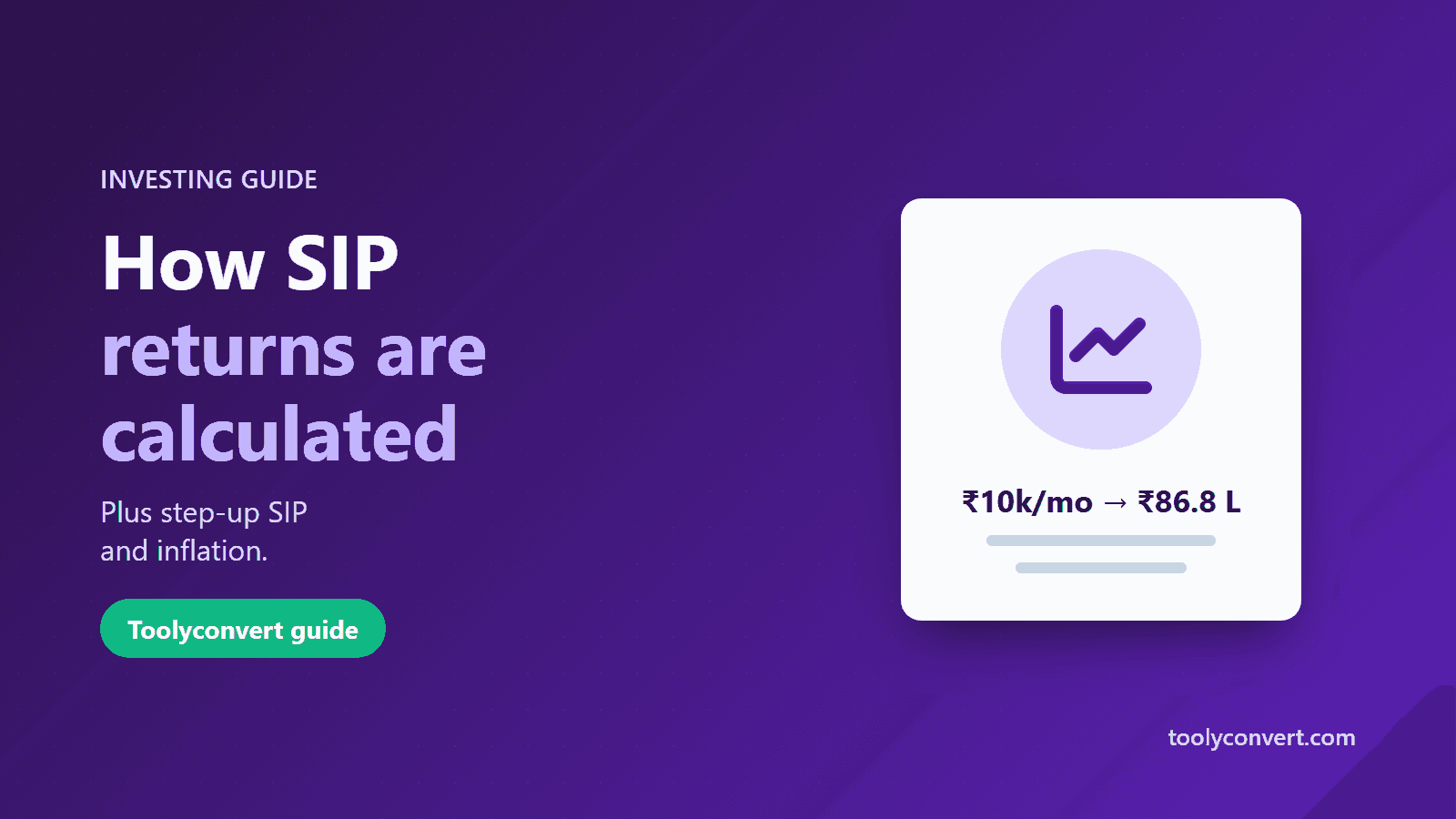
| 10% yearly step-up | ₹38.1 lakh | ₹86.8 lakh |
The step-up raises the final amount by about ₹36 lakh. Most of it comes from the bigger instalments in the later years.
Don’t forget inflation
₹50 lakh in 15 years will not buy what ₹50 lakh buys today. At 6% inflation, prices more than double in 15 years. Turn on the inflation option in the calculator to see your final amount in today’s money, and plan your goals in future prices with the Inflation Calculator.
What return should you assume?
There is no guaranteed number. Many planners use about:
- 10–12% a year for long-term equity funds
- 9–10% for hybrid funds
- 6–7% for debt funds
Real returns vary every year, and equity funds can fall sharply in some years. Using a slightly lower assumption gives a safer plan.
SIP vs lump sum
A lump sum invested at the start has more time to grow, so on paper it often ends higher. A SIP spreads your buying across market ups and downs and fits a monthly salary. Many people do both: a lump sum when they receive a bonus, and a steady SIP every month. The calculator has both modes, and you can add a starting lump sum to a SIP.
What the calculator does not include
- Fund expense ratios, which are already reflected in a fund’s published returns
- Capital gains tax on redemption
- Exit loads if you withdraw early
Quick checklist
- Start as early as you can.
- Step up the SIP every year.
- Use a conservative return assumption.
- Plan goals in future prices, not today’s.
Plan yours with the SIP Calculator, and compare fixed-return options with the Compound Interest Calculator.
Mutual fund investments are subject to market risks. This guide is educational and not investment advice.