Compound interest is often called the eighth wonder of the world. The idea is simple: you earn interest on your interest. Over long periods that small difference becomes huge. This guide explains it with numbers you can check in the free Compound Interest Calculator.
Simple vs compound interest
Simple interest is paid only on the original amount. ₹1 lakh at 7.5% earns ₹7,500 every year: after 10 years you have ₹1,75,000.
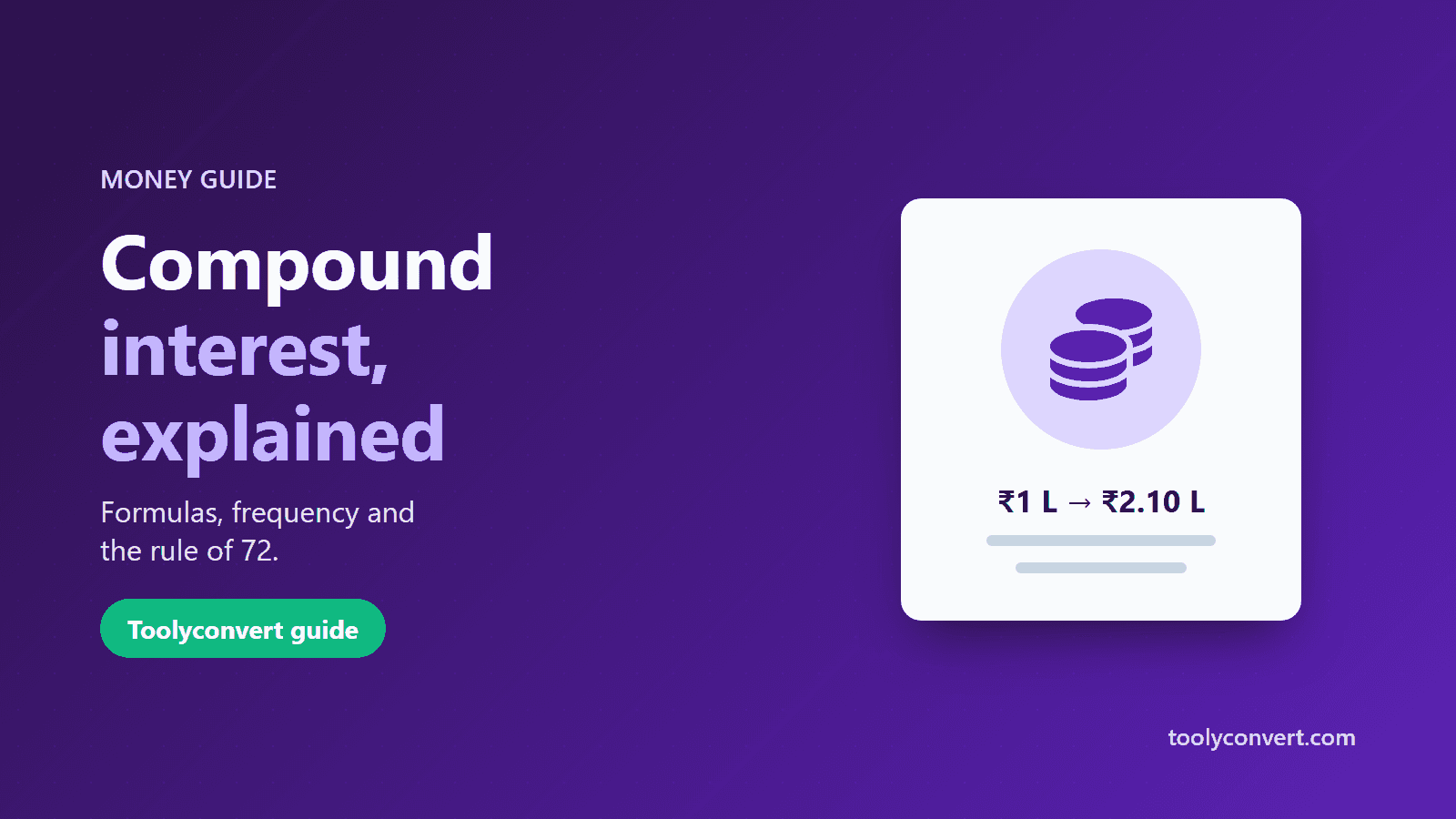
Compound interest adds each period’s interest to the balance, so the next interest is calculated on a bigger amount. ₹1 lakh at 7.5% compounded quarterly for 10 years grows to about ₹2,10,235, which is ₹35,235 more than simple interest.
The formula
A = P × (1 + r/n)^(n × t)
- P: starting amount
- r: yearly rate as a decimal (7.5% = 0.075)
- n: number of times interest is added per year
- t: years
Why compounding frequency matters
The same ₹1 lakh at 7.5% for 10 years:
| Compounding | Final amount |
|---|---|
| Yearly | ₹2,06,103 |
| Quarterly | ₹2,10,235 |
| Monthly | ₹2,11,206 |
More frequent compounding pays slightly more. Indian bank fixed deposits usually compound quarterly.
The effective annual rate
Banks quote a yearly rate, but the true growth depends on compounding. The effective annual rate (EAR) shows the real yearly return:
EAR = (1 + r/n)ⁿ − 1
7.5% compounded quarterly is an EAR of about 7.71%. That is why 7.5% quarterly beats an offer of 7.6% compounded yearly. Always compare effective rates.
The rule of 72
To estimate how long your money takes to double, divide 72 by the interest rate:
- 6% → about 12 years
- 8% → about 9 years
- 12% → about 6 years
It is a quick mental check; the calculator shows the exact doubling time for your compounding frequency.
Time is the secret ingredient
| ₹1 lakh at 8% compounded yearly | Value |
|---|---|
| 10 years | ₹2.16 lakh |
| 20 years | ₹4.66 lakh |
| 30 years | ₹10.06 lakh |
The last 10 years add more than the first 20 combined. That is why starting early matters so much.
Adding money regularly
Most people save a little every month rather than once. Recurring deposits work this way. In the calculator, add a regular amount every month or year to see the combined effect of saving and compounding.
Compounding works against you on debt
The same maths makes debt grow fast. Credit-card balances can charge around 3% a month; an unpaid balance roughly doubles in two years. Pay high-interest debt first before investing.
Don’t forget tax and inflation
- Tax: FD and savings interest is added to your income and taxed at your slab rate, and banks may deduct TDS.
- Inflation: if prices rise 6% a year, a 7% deposit grows your buying power by only about 1% before tax. Check with the Inflation Calculator.
Common mistakes
- Comparing a monthly rate with a yearly one. 1% a month is not 12% a year; compounded it is about 12.68%.
- Ignoring the payout option. A deposit that pays interest out every quarter does not compound; only the cumulative option does.
- Breaking deposits early. Premature withdrawal usually means a penalty and a lower rate, which cuts the compounding short.
Quick checklist
- Compare effective annual rates, not headline rates.
- Start early and stay invested.
- Reinvest interest instead of withdrawing it.
- Pay off expensive debt first.
Run your own numbers in the Compound Interest Calculator, or plan monthly mutual fund investing with the SIP Calculator.